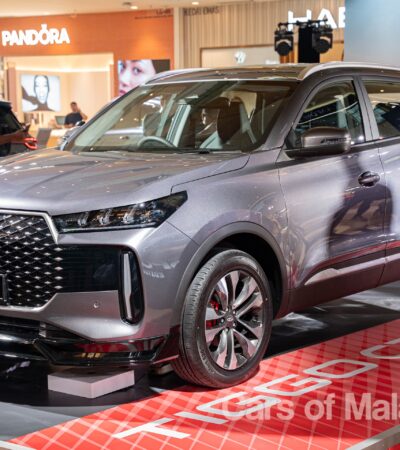
Chinese carmakers are no strangers to headline-grabbing battery safety demonstrations, and now Chery has taken the spotlight – and done it right here in Southeast Asia. The brand recently carried out an extreme durability test of its Chery Super Hybrid (CSH) battery in Jakarta, Indonesia, submerging the unit in a metre-deep tank of seawater for over 53 hours before reinstalling it into a Tiggo 8 CSH. The vehicle was then driven down a steep ramp to demonstrate that the battery remained fully functional.
“This battery safety test is part of a Global Safety Test campaign that reflects our commitment to continuously redefining the limits of automotive safety technology,” said Chery Sales Indonesia brand department head Rifkie Setiawan.
Seawater immersion is no small feat – it’s highly conductive and corrosive, accelerating the risk of material degradation, short-circuits, and thermal events. Chery’s test validates the CSH battery’s resistance to such extreme elements, providing assurance for drivers in tropical regions with high humidity and unpredictable flooding.
The test was designed to assess:
Seal durability against corrosive liquids
Electrical insulation performance
Structural integrity under stress
Charging and discharging stability
The Tiggo 8 CSH uses an 18.3 kWh lithium iron phosphate battery with:
IP68 water and dust resistance rating
Operating temperature range of -35°C to 60°C
Up to 90 km EV range in full electric mode
Fast charging from 30% to 80% in 20 minutes
The battery structure itself is bolstered by what Chery calls a Chainmail Battery Safety Structure, anchored by 14 safety points. This architecture not only enhances protection but also improves chassis rigidity by 7%, and can endure extrusion forces up to 200 kN.
Additional protective measures include:
10-layer insulation base
15-layer side protection
16 thermal layers to mitigate fire and overheating risks
This wasn’t the first time Chery put its battery through rigorous trials. In China, the CSH battery has already passed:
Spiral rollover tests
Dual collision simulations
Seven-vehicle stacking
55 km/h side intrusion test
4.9-metre drop test
720 hours of salt spray exposure
Next up, the company will head to Mexico, where the Tiggo 7 CSH will undergo underbody scraping and high-altitude driving tests. Brazil and South Africa are also on Chery’s roadmap for further real-world assessments.
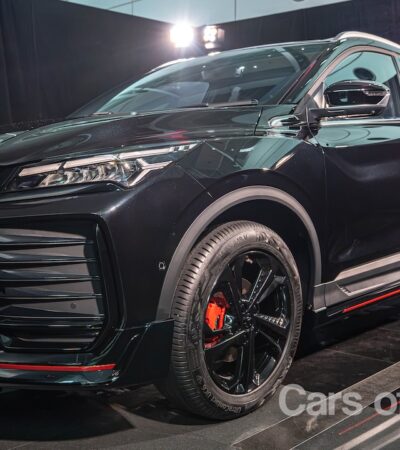
Chery’s plug-in hybrid ambitions aren’t limited to overseas markets. At the recent Malaysia Autoshow 2025, the brand displayed a trio of electrified SUVs – the Tiggo Cross HEV, Tiggo 7 PHEV, and Tiggo 8 PHEV. While official launch dates have yet to be announced, these sightings hint that the CSH battery tech could be headed to Malaysian showrooms in the near future.
As the race to win Southeast Asia’s hybrid and EV market intensifies, Chery’s focus on battery safety and real-world stress testing could give it a distinct edge, especially in regions where climate resilience matters just as much as efficiency.
A car guy with retail experience in the automotive industry and a home mechanic during off days. Jay is living his childhood topgear dreams working with Cars of Malaysia