At the end of 2023, the number of EVs sold in Malaysia accounted for about 1.3% of the total-industry-volume (TIV) of 799,731 units. And with the ambition of increasing this percentage, our local brand now finally has a viable product for this purpose – the Proton e.MAS 7. And as someone who was truly curious about this new car, I consider myself lucky to get the chance to drive it on an (almost) nationwide tour called the “Proton e.MAS 7 Tour” (I only drove it across Peninsular Malaysia, missing out on the Sabah and Sarawak tour). It was also a good opportunity for me to review the Proton e.MAS 7, albeit in its prototype versions.
Disclaimer
In case you didn’t catch that last sentence, I’ll just repeat it again that I was driving the prototype versions of the Proton e.MAS 7. In fact, I drove at least 4 different prototype units with varying settings (and various completion status) for the purpose of the tour. And thus I shall highlight each aspect of the car in its most complete state.
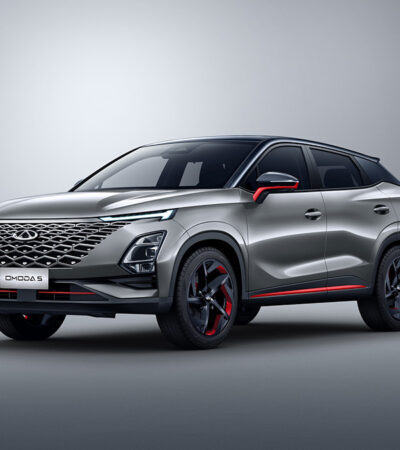
Now back to the Proton e.MAS 7. It is a C-segment SUV that is about the size of the Proton X70 or even the Honda CR-V. But since it is electric, it is going against the likes of the BYD Atto 3 and the Chery Omoda E5. And in that sense, it is easily a larger competitor with more space to offer.
By the time this article is published, Proton would have revealed the estimated price of the e.MAS 7. Some further specifications of the car may also have been revealed. But at the moment of writing, here are details of the Proton e.MAS 7 that we can confirm…
Powertrain: Single-motor front-wheel drive (FWD)
Max. Power Output: 160 kW (218 PS)
Max. Torque: 320 Nm
0-100 km/h: 6.9 seconds
Battery size: 60 kWh or 49 kWh (depending on variant)
Range: Est. 430 km or 345 km (depending on variant)
Max. AC charging: 11 kW 3-phase
Max. DC Charging rate: 100 kW
And with those details laid out, let’s explore the Proton e.MAS 7 together…
Proton e.MAS 7 Exterior – Easily one of the more digestible designs out there
Although heavily camouflaged, you can already see the basic proportions of the Proton e.MAS 7 and its key body lines. And in this sense, there is nothing too out of the ordinary about the car. Sure, it has concealed door handles and a “continuous” tail light design, but those things aren’t exactly a novelty these days. That said though, I do appreciate the unique dotted line touch on the taillights that give it an identity of its own.
And if all there is to compare the e.MAS 7 to are the Atto 3 and E5, I’ll say that the e.MAS 7 is the best-looking among the three – followed by the Chery and the BYD in that order. Its design isn’t one to turn heads, but its competitors don’t have much to offer in this department too.
Proton e.MAS 7 Interior – Thank you for being subtle
I was expecting something a bit out of the ordinary with the Proton e.MAS 7’s cabin, but thankfully it keeps things simple. There’s no “exposed muscle” design here, and neither are there musical instrument-inspired elements. Thank God. And although you may have seen the Geely Galaxy E5’s white interior, the e.MAS 7 keeps it sombre & practical with a dark interior instead for the Malaysian market.
The e.MAS 7 does have a fancy ambient lighting system, but it’s not the type that is too in your face. And if it was up to me, I wouldn’t even option the car with this feature as a more subtle and understated interior is more to my liking.
Like some other Chinese brands in the market, I’d have to commend the comfort levels in the Proton e.MAS 7. The seat cushions are slightly soft and the seats themselves are pretty supportive. In fact, after driving it across Peninsular Malaysia, I’m happy to report that I have zero body aches. There’s also the benefit of the ventilated front seats which are always handy, given our hot & humid climate.
The ergonomics are pretty decent too with the nicely-positioned armrests, so you can drive in a relaxed manner. What I’m not really a fan of would be the way that the centre console is designed. The “hidden storage” feels unoriginal and the buttons and the rotary volume knob on the console feel a little bit out of place. They are no doubt functional, but they could be better integrated into the design of the console.
Still relating to the subject of ergonomics would be the steering wheel of the Proton e.MAS 7. It is the first of its kind for a Proton car as it gets a 2-spoke design with a flat bottom and top. Although it may look weird at first, it does have a pretty good grip on it, and the multi-control buttons have a decent tactile feeling to them. Some functions may not be so intuitive, but if you’re going to buy one, you will eventually get used to it.
As for the space in the Proton e.MAS 7, I’ll have you know that it is very spacious for its class. Sure, the front seats may give you a cockpit-like feeling, but the second row provides generous legroom. This itself may be a reason for families to get the e.MAS 7. Comfort in the second row is decent too as the bench gives ample support and the backrest comes with 2 recline angles.
Proton e.MAS 7 Screens and entertainment – Gives its rivals a run for their money
With more and more cars becoming screens on wheels, I feel that this review deserves a dedicated sub-heading for this topic itself. The Proton e.MAS 7 gets a fancy 15.4-inch screen which provides a decent degree of entertainment and also serves to simplify the dashboard of the car (due to most functions being placed inside the screen).
The screen speed is decent and I’d say that the menu is moderately easy to understand. You may struggle to find some functions, but most of them can be figured out quickly. The 360° view is decent and since the car has its own navigation system, it is also intelligent enough to estimate your battery range left at the end of a journey. Speaking of this, there’s also an integrated charging map which lets you browse almost all the available public chargers in Malaysia.
There are a few quirky features in the screen too such as the “Rest Space” and “Camping Mode” which can be handy at times. I personally just enjoy the nature sounds that are emitted when “Rest Space” is activated as it provides a calming ambience in the cabin.
We can’t mention the head unit of the Proton e.MAS 7 without talking about its speakers and in this sense, the e.MAS 7 is a steal. The sound system is actually impressive if you put it against the BYD Atto 3 and the Omoda E5. In fact, it may just even sound better than the sound systems of some pricier cars. And if you didn’t know it yet, the sound system for the e.MAS 7 is a Wanos surround sound system with 16 speakers which some of the product guys claim to be comparable to a Dolby surround sound system (although the comparison isn’t exactly necessary). I just enjoy hearing the nature sounds via these speakers, but if you like to blast music while you drive, I’m pretty sure it will be just as satisfying if not more.
Proton e.MAS 7 Driving Experience - A comfortable family SUV
I’ll keep it short and sweet for you, the Proton e.MAS 7 is a decent commuter car. If you want comfort, it’s got it. It’s just not meant to be driven hard (as all family SUVs shouldn’t).
But if you want me to expand a little more, you can read on…
Being a single-motor EV, it can easily do the century sprint in less than 10 seconds. It does claim a 6.9-second 0-100 km/h acceleration time – we didn’t quite manage to get that time in real life, but it is a decently quick family car. And to me, this quick acceleration makes it a safer car, as you won’t take too long to overtake, especially on tight B-roads.
Although the initial acceleration is a breeze, it could use a bit more top end power. That would make it an easy winner in my books, but perhaps I have become accustomed to dual-motor EVs which can easily do sub-5-second century sprint times and feel effortless during overtaking maneuvers on the highway.
During the entire tour, I did drive at least 4 different prototypes of the Proton e.MAS 7. Some are softer than others, but I believe Proton is still fine tuning the suspension setup of the e.MAS 7. The “firmest-riding” e.MAS 7 prototype was actually quite decent, but still not a car that I would categorise as firm. It was just the firmest e.MAS 7. If anything, it takes me back to my point that the e.MAS 7 is a decent commuter car.
And if there’s things I would improve on the e.MAS 7, it would be a faster “kick in” of the regenerative braking and the addition of a “one pedal driving” mode. Its transition from regen braking to actual calliper braking is considerably smooth (for its segment).
As for the overall comfort, the average person may still need to get used to being ferried around in an EV. The new ride experience can be overwhelming, and this is a general statement for EVs.
Range test and energy consumption – 14kWh/100km on average, 18 kWh/100km on the highway
So while I was on the 3rd of the Proton e.MAS 7 Tour I did get a chance to at least do one range/efficiency test with the car. And this was managed during the trip from Kota Bharu to Shah Alam via Gua Musang.
So we started from Kota Bharu with 95% state-of-charge (SoC) with 474 km of range. After driving for 194 km, we reached Gua Musang with 45% SOC and 231 km of range left. So with 95% state of charge, we could have driven for about 425 km. So a full charge would have probably given as about 430-440km of real world range.
Mind you this was done with pretty quick driving on B-roads, and if we do the maths, we basically managed an energy consumption rate of 14.2 kWh/100km.
At Gua Musang, we charged up to 80% and the computer said that we had about 402 km of range. With this, we drove straight to the Proton Centre of Excellence in Shah Alam for 269.3 km and ended up with 9% SoC and 46 km of range. For Gua Musang to Shah Alam, we managed an energy consumption rate of 14.7 kWh/100km with an average speed of 74 km/h.
And just a note for you guys, EVs generally use more energy during highway driving, and at most (while driving on the highway), we were getting an energy consumption rate of 18 kWh/100km.
With only the BYD Atto 3 and Chery Omoda E5 to compare against, the Proton e.MAS 7 easily offers much more value and size. It’s a decent commuter car, and it by right could be the EV that encourages mass adoption. It may just have come a little too late to grab the early EV adopters who have made their purchase.
With a deep interest and relevant experiences in the automotive industry, Arif writes about everything automotive. His employment history includes being an automotive production engineer, a highway project engineer, an alternative-fuel researcher, and a motoring journalist.
In case you'd like to nerd out, you can check out his research paper here: https://aiche.onlinelibrary.wiley.com/doi/10.1002/ep.13749