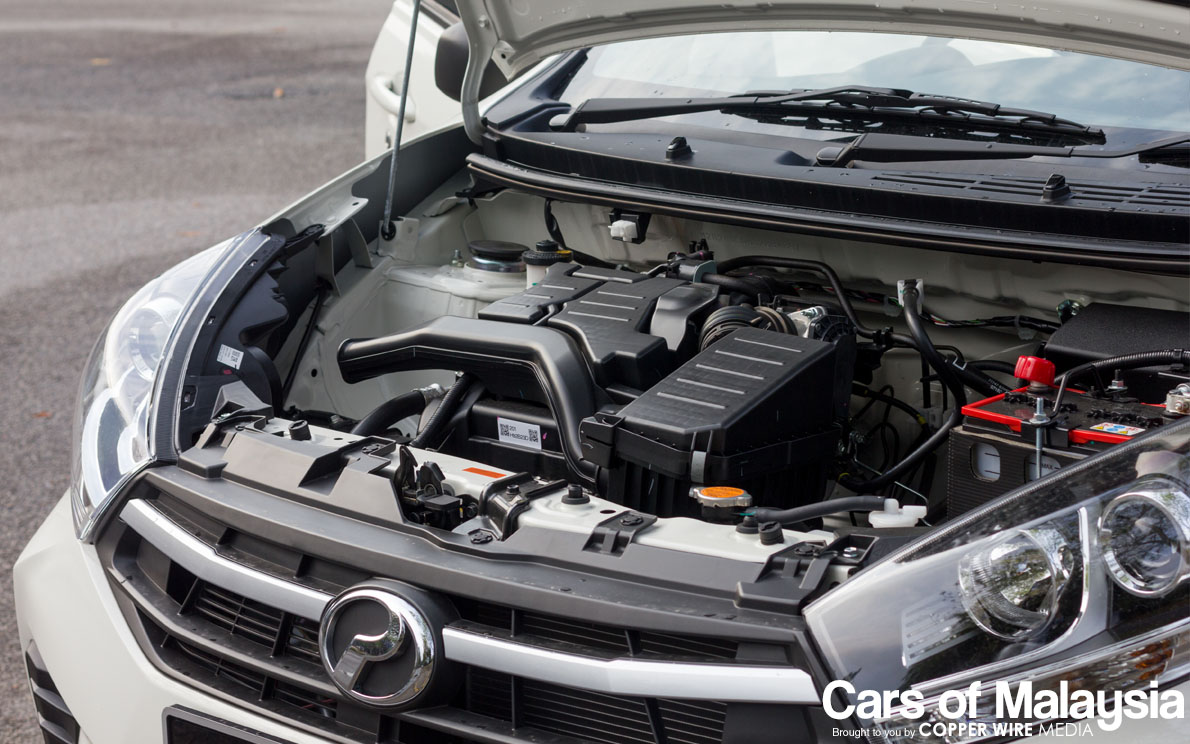
First things first, you must be ready to offer a deal (at least an offer figure that you are ready to commit). You don’t want to be wasting the sellers time, checking the engine and whatnot, only to disappoint him/her with no offer. Don’t be be that guy.
2. Make Sure It Is A Legit Car With Legit Papers
Vehicle Ownership Certificate
Ask to see the grant. Most cars have transitioned to the Vehicle Ownership Certificate (VOC) or ‘Sijil Pemilikan Kenderaan’. Some cars might still be using the ‘Registration Card’ or ‘Grant’ as we usually call them.
Do note that with the new VOC, vehicle ownership transfer can be done online. All records on road tax renewals and transfers of ownership are recorded in JPJ’s computerised system.
We’ll talk more about the legal procedures and papers next time.
What can we see from the VOC?
The chassis and engine number.
Check if they match with the numbers on the car. Sometimes the engine head may have been replaced. Sometimes the entire engine has been swapped. This happens for a reason, and 90% of the time, it’s a damaged engine.
You can also check the actual year of make of the car on the VOC and compare it to the claimed year in the advertisement. See if they match. If they don’t, you can always use this information to bring the price down when negotiating.
The VOC also displays the original status of the car. In the case of the picture above, the original status of the car is a used import.
3. Start The Engine
If you can’t start the car, it’s usually better to walk away from the deal. The seller might be trying to hide some serious issues that the car has. There’s no point negotiating when you have a vague idea of the condition of the car. There are several possible reasons why a car doesn’t start:
A blown starter relay fuse (easy fix*)
A broken starter relay (easy fix*)
A broken starter (moderate difficulty fix**); price depending on car
The battery is weak (easy fix*)
The transponder in the key is low on battery (easy fix*)
The fuel pump is faulty (moderate difficulty fix**); price depending on car
The fuel filter is clogged (moderate difficulty fix**)
It has faulty spark plugs (sometimes they’re just loose) (easy fix*)
*Can usually be fixed with a simple part replacement and minimal tools.
**An American or an Australian might try to fix this themselves. If you’re a Malaysian, just take it to the shop.
If it’s a bad starter and the seller says it’s the only thing you’ll have to fix, it most likely is not the only thing you’ll have to fix. Unless you start the engine, you are unable to diagnose some vital things about the car.
If the engine starts, great.
There are more things for you to check…
4. Check The Exhaust Smoke
If it’s blue-ish smoke, it means the car is burning some engine oil. That’s not good. It might be worn out piston rings, worn out valve seals, or even a head gasket failure.If it’s puffing a lot of white smoke, that’s also not good. It could be a head gasket leak.
4. Make Sure You Try A Cold Start
The car will behave differently in cold and warm conditions. It’s usually harder to start in cold. It gets extremely hard to start in extremely cold weather conditions but the coldest temperature in Malaysia is somewhere at 27°C. A good car in Malaysia should have no problem starting at all.
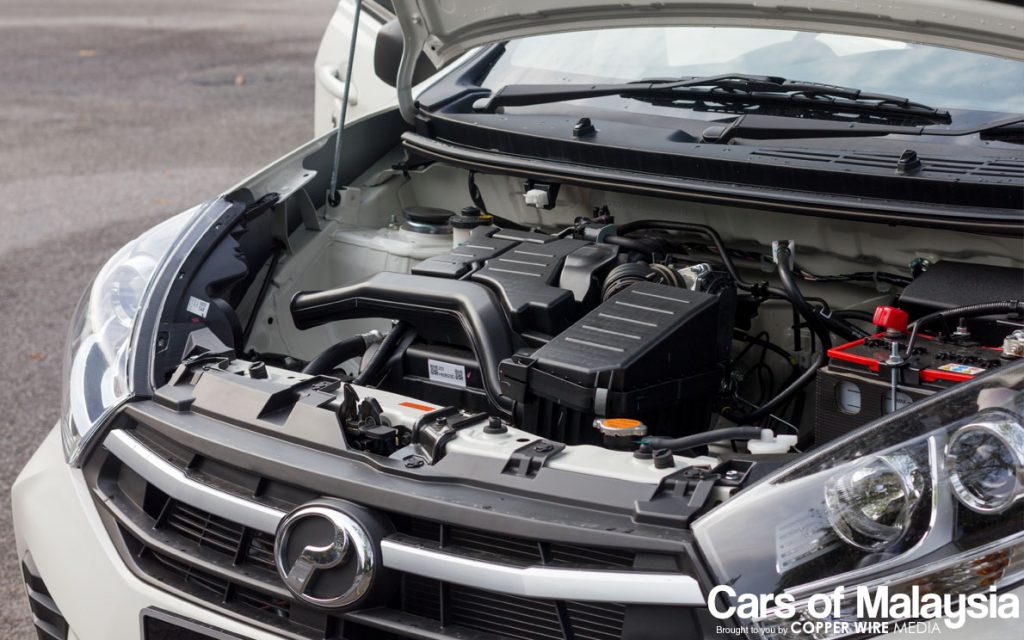
5. Check The Engine Bay As The Engine Is Started.
If the engine twists violently as the car is started, it might be a case of a broken engine mount. Not good. Use a torch light and look around the engine bay for leaks and listen carefully for irregular noises.
6. Let The Engine Idle (And Check A Few Things While You’re At It)
A constant high engine idling speed could indicate:
Problems with airflow into the engine
Problems with the idle air control valve.
Standard engine idling speed is usually at 1,000 rpm and below. Sometimes this is written on a badge under the hood. If you can’t find it there, have a look through the owner’s manual.
Smaller engines may rev higher initially but will come down to the designated engine idling speed after a while. The idling speed is regulated by the idle air control valve.
While the engine is still running, go ahead and check on some electronics and other basic things on the car
6.1. Check if the radiator fan works
The fan usually kicks in when the water temperature reaches 87oC to 89oC. If it doesn’t turn on, it could be the following:
A faulty fan motor (hit it with the handle of a screwdriver/hammer. If it runs after a few knocks, the fan motor needs replacing)
A faulty fan motor relay (check the fuse & relay box)
A faulty fan motor relay fuse (check the fuse & relay box)
A faulty thermostat (check the temperature gauge, or use an OBD2 scanner)
6.2. Check the lights
Turn on the full beams and check if they all work. Check the brake lights with the headlights on and the headlights off.
Turn on the hazard lights and check if all indicator lights are working fine.
Shift into reverse and check if the reverse lights are working.
6.3. Check The Air-Conditioning Unit
Turn it on and check if it works. Some cars have one common fan for both the radiator and the air-conditioning unit. Some cars have them separate. If the air-conditioner is not working you might have a faulty compressor or a faulty air-conditioner fan
6.4. If You Have An OBD2 Scanner, Use It (If Applicable)
Get whatever information you can. Sometimes the ‘check engine’ light can be turned off. Sometimes you can detect if the computer system has been tampered with.
6.5. Make Sure All Warning Lights Are Working
Turn the key into the ‘ON’ position, and see if all warning lights light up.
Note in the picture above that the ‘ABS’ warning light is not turned on since the car is not equipped with ABS. The ‘AT’ (Automatic Transmission) light is also not turned on since the car does not have an automatic transmission.
Sometimes warning lights don’t turn on because they have been tampered with to hide a fault with the car.
7. Turn the Engine Off and check the fluids
If the car is parked at a weird angle, the seller might be trying to hide a leak. Park the car on a level flat surface and check underneath for leaks.
The basic thing with fluids is to check:
Colour
Texture
Levels
Leakage
What fluids are there for you to check?
7.1. Engine Oil
Check the engine oil fill cap. Check for sludge (Sludge indicates possible head gasket leak).
^Metal specs on the engine oil dipstick are not a good sign Image Source
Check the dipstick. Make sure it’s between the minimum and maximum levels. If it’s below minimum, bad. If it’s above maximum it could be the seller is trying to hide a case of engine oil leak.
Check for specks of metal or froth on the dipstick. If you find any of those two, walk away from the deal. Specks of metal indicate that the engine is already eating itself away. Froth or foam indicate water contamination (and many other possible serious issues with the engine).
^Metal specs on the engine oil dipstick are not a good sign Image Source
Froth may indicate water contamination or other serious issues Image Source
7.2. Coolant Liquid
Check for Colour, texture, levels, and leakage.
Check the colour. Coolant is usually bright in colour. Make sure there is no oil or sludge in the coolant reservoir (Possible head gasket leak)
7.3. Brake Fluid
Check for colour, texture, levels, and leakage.
Check the brake master cylinder for the brake fluid.
7.4. Power Steering Fluid (If Applicable)
Check for Colour, texture, levels, and leakage.
Most modern cars are already using Electronic Power Steering (EPS) so there will be no power steering fluid reservoir.
Check the power steering reservoir for the power steering fluid.
Same thing: Check for Colour, texture, levels, and leakage.
Again, most fluids in the engine bay are bright in colour. If it has turned dark or sludgy, that’s bad, and could indicate more serious damage that has been done to the car.
8. And lastly, take a look under the car
Briefly, check for leaks and check for damages to the oil pan…. There’s more to talk about on checking the underside, and I’ll continue in a later update.
With a deep interest and relevant experiences in the automotive industry, Arif writes about everything automotive. His employment history includes being an automotive production engineer, a highway project engineer, an alternative-fuel researcher, and a motoring journalist.
In case you'd like to nerd out, you can check out his research paper here: https://aiche.onlinelibrary.wiley.com/doi/10.1002/ep.13749