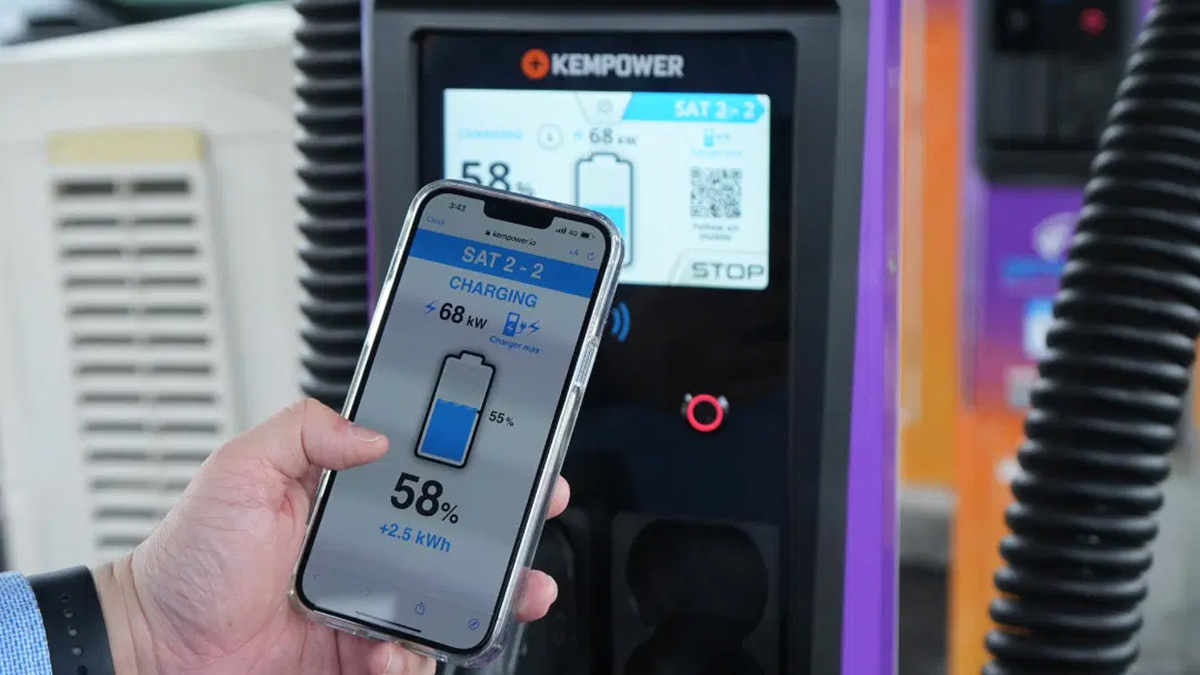
Back in March 2022, the government under the previous administration set a target to have 10,000 public electric vehicle (EV) charging stations. Fast forward to the end of 2025, and Malaysia has a total of 5,360 public EV charging stations, barely passing the halfway mark. The problem? Huge investments are required by charging point operators (CPOs) to increase the number of EV charging stations. Kempower, an electric vehicle fast-charging solutions provider from Finland, suggests a solution.
Kempower Director of New Markets, Carlo Cecchi, said, “Malaysia is a key market in Southeast Asia’s electrification journey. We see strong momentum driven by supportive policies, growing industry collaboration, and increasing consumer interest.” He further expanded, “As the market evolves, the conversation is no longer just about deploying chargers quickly, but about ensuring they are well utilised, reliable, and designed to scale sustainably.”
Many charging sites underperform, not because there is a lack of demand—in fact, with the rising number of electric vehicles on the road, demand is at an all-time high. Rather, it is because of suboptimal location planning, oversized infrastructure, and an inconsistent user experience. Looking at other countries, such as Norway, user behaviour in charging electric vehicles revolves around availability and convenience, rather than maximum charging speed.
What Kempower is suggesting is that rather than overbuilding capacity upfront—such as by installing one or two charging points that deliver ultra-fast charging—operators should build multiple optimised charging points that cater to the ‘goldilocks’ charging rate zone. Kempower mentioned that based on their data, the vehicles themselves dictate the charging power they receive, which averages to about 88 kW, despite the charging station being able to deliver more. Basically, building the right charging points that require less upfront infrastructure cost is better than building the fastest charging point with a massive upfront infrastructure cost.
Kempower’s solution allows both the power capacity and the number of charging points to grow over time, ensuring networks can cater to evolving usage patterns while maintaining high uptime and a seamless user experience. Carlo Cecchi added, “Data across global markets consistently shows that increasing the number of charging points has a stronger impact on utilisation than simply increasing power output. Ultimately, drivers value accessibility, reliability, and ease of use. Being able to charge without waiting is often more important than charging at the highest possible speed.”